

Blog / Technology

How Often Do I Need to Change My EV’s Battery?

Toyota EV Charging

With an electric vehicle (EV), you’ll never have to go to the gas pump ever again, which is great for your wallet and your well-being. However, just like gasoline and diesel vehicles need major engine service eventually, electric cars need their drive batteries replaced after a certain time. While infrequent, this can be the most expensive maintenance task for EVs.

As the owner of an electric car, making your EV battery last longer will help you save money in the long run. It's critical to understand how long your EV battery will last so that you are informed of all the expenses related to your car. Learn more about the batteries in electric cars, their life span, and ways to preserve and extend your battery's range with this Koons Tysons Toyota guide.

When Should I Change my EV Battery?

Although battery life span and resistance to range loss vary depending on the automaker and vehicle, current batteries in electric cars can last for tens of thousands of miles, often up to 100,000 in a new Toyota. Unless you drive an unusually high number of miles per year or put the drivetrain through very rough conditions, your new EV battery shouldn't need to be replaced for many years. Each electric car sold will have an owner's manual with specific times to change the battery, usually with a mileage recommendation similar to the warranty coverage limit.

Like with all lithium-ion batteries, there will be some reduction in an EV's charge capacity over the years. The average range loss for EVs is 2.3% per year, although this considers new and old EVs currently on the road. There are predictions that current electric automotive batteries could last as long as 20 years.

Why Do EV Batteries Need Replacement?

Some people visit a Toyota service center and are surprised to learn that their battery needs replacement earlier than expected. Some motivations for replacing EV batteries include the following:

  • Older Technology: Due to a less advanced battery or drivetrain design or the vehicle needing maintenance, your battery may need to be changed more frequently if your car is older.
  • Battery Damage or Wear: Your battery will probably need to be replaced if it was compromised in an accident or by some other kind of harm. Certain habits, such as letting the battery get too close to empty or fast charging all the time, can wear down the components necessary to maintain a charge.
  • Warranty Coverage: Most EV manufacturers offer a warranty on their electric drivetrain and battery systems, usually eight to 10 years and a set number of miles. If your battery needs to be replaced, ignoring the recommended service window might lead to losing warranty coverage.

The battery pack in your car can be changed for free at the right shop if it’s still covered by warranty, of course, but some automakers will only do so if the battery has lost a significant portion of its range. Since Toyota is known as a hybrid pioneer, their only current all-electric car is the new 2023 bZ4X. This compact SUV is built with just as much attention to detail as the rest of the automaker's varied lineup. It also gets an eight-year/100,000-mile EV Component Warranty covering the traction battery and all related EV parts.

In some cases, individual battery cells can be replaced, helping restore your car's range to its factory levels before getting to the point where replacement is necessary. For some drivers, simply waiting to get a replacement may be the better choice, and our team can help you decide. 

How Much Does an EV Battery Replacement Cost?

Your EV’s drive battery basically serves as the engine. It's a critical part and one that has a lot of rare metals and important components. Battery packs for EVs can range in price from $5,000 to $20,000. Luxury electric cars tend to cost the most to maintain. 

If you want to save time and money, it’s important where you get your EV serviced. The last thing anyone needs is multiple visits to fix issues caused by an improperly installed EV battery. At generic automotive shops or dealerships not certified to service your vehicle make and model, it's uncertain what level and quality of work you might get. Schedule a battery replacement and other parts of a much-needed EV service checkup at Koons Tysons Toyota service center.

How Can I Make an Electric Car Battery Last Longer?

Taking care of an electric car battery is fairly straightforward. As with mobile phones and laptop computers, avoid fully charging or fully depleting the battery repeatedly, as going below 20% or above 80% too often can be hard on the system. Some other pointers include gradually accelerating and other defensive driving tips.

When recharging your automobile, try to plan ahead so that you don't need a fast charge, as repeated fast charging could have consequences. Although EVs often advertise how quickly they can fast charge, it's still the most intense method. Fast charging repeatedly or exclusively can damage a new electric car battery and may reduce its range and life span sooner. Lastly, try to park under a roof and out of the sun or in a garage to reduce the EV battery’s exposure to extreme heat or cold.

Buy and Maintain Your Next Car at Koons Tysons Toyota

At Koons Tysons Toyota, we're proud to help folks around Vienna, Virginia, afford their first electric or hybrid car. Apart from getting the most use out of an EV battery, it's also vital that you find the best deal on each car you purchase, finding opportunities for more generous financing and bigger discounts.

A quality electric car can help reduce your reliance on fossil fuels. However, there are some specifications you should check for to make sure you're getting the best EV you can afford. Remember Koons Tysons Toyota if you're after a better deal on an electric or hybrid Toyota car and access to the best service experts in the area. Check out our ToyotaCare plans and get two years or 25,000 miles of no-cost maintenance covering all your vehicle's needs, whether for EVs or any other model vehicle. You'll be glad you visited the top Toyota dealership in Vienna.
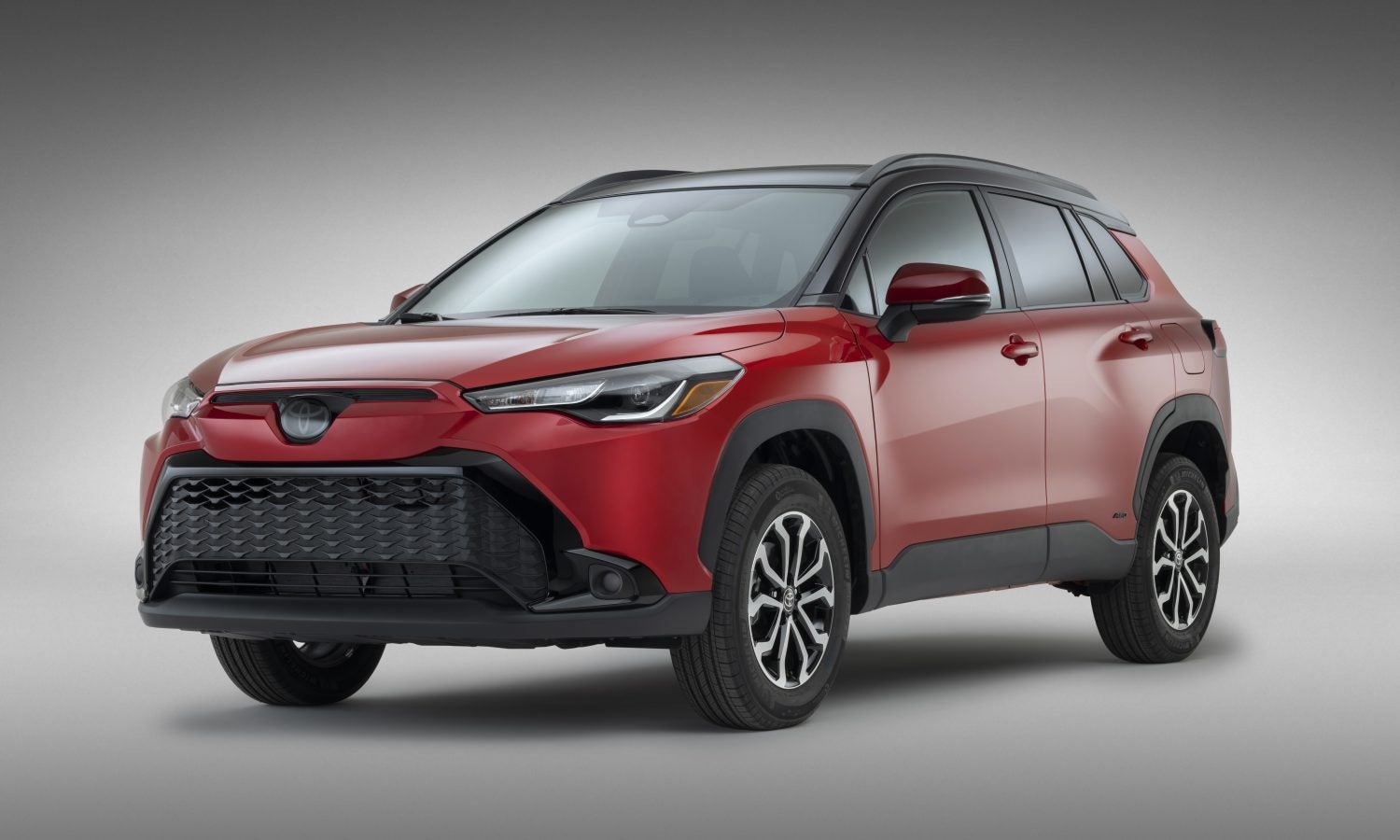
Image by Toyota Newsroom

Posted in:

Related Posts

2023 Toyota Corolla Cross Hybrid

Should I Buy a Hybrid, Electric, or Gas Car?

As technology develops, gas-powered cars are starting to be overtaken by electric and hybrid options for the same vehicles. Many manufacturers started producing hybrids and electric vehicles (EVs) as a response to fluctuations in gas prices and rising demand from consumers. With so many options available, many people wonder what the pros and cons of each vehicle type are. Keep reading to learn about the differences between gas, electric, and hybrid vehicles. Gas-Powered Vehicles Gas-powered vehicles were the first to see widespread use in most parts of the world. At their inception, gas was relatively available and allowed for more power and longer driving distances than other options. Now, as the price of gas fluctuates in response to world events there are some pros and cons to choosing a gas-powered vehicle. Pros One of the reasons gas-powered engines continue to see widespread use is that they provide the power and performance people need to drive effectively. This is especially true in rural areas, where access to charging stations can be very low or completely nonexistent. Another reason these vehicles are still popular is that they have lower prices than either electric vehicles or hybrids since the technology is relatively old. Another pro of gas-powered vehicles is that maintenance costs are relatively low compared to EVs and locations that can provide these services are plentiful. An average gas-powered vehicle can also go around 300-400 miles on a single tank of gas, making them have excellent long-range driving capabilities. Finally, gas-powered vehicles have better torque and can haul trailers and other large cargo more easily than EVs and hybrids. Cons Gas-powered vehicles also have some cons. They contribute to pollution with their emissions, something many countries and companies are starting to pay more attention to. With more attention, there's more focus on creating low emissions. Another con of gas-powered vehicles is that they use a non-renewable resource for fuel. At some point in the future, gas won't be widely available. As the scarcity of this resource decreases, the price of gas will increase making it more and more expensive to fuel gas-powered vehicles effectively. Once the resource is completely gone, these vehicles won't function. Electric Vehicles EVs are a growing source of transportation for people around the world. As they become more popular, the technology they use becomes better and more efficient, giving them longer ranges better batteries and more locations to recharge. Like gas-powered vehicles, EVs have pros and cons you should consider when researching your next vehicle. Pros There are several pros to buying an EV. First, they are convenient since you can plug them in at your home and charge them easily, without leaving. Second, these vehicles have zero emissions when you drive them so they're much better for the environment than their gas-powered counterparts. Third, they don't require oil and often need a lot less regular maintenance than a gas-powered vehicle since there aren't as many moving parts subject to wear and tear. Another reason you may want to get an EV is that you can sell a used EV for a much higher price point than a used gas-powered vehicle. Further, the vehicles are relatively quiet while on the road, reducing noise pollution in areas such as cities and on highways that pass suburban areas. EVs cost less over time than gas-powered vehicles, since electricity is cheaper per mile than gas. Cons Like gas-powered vehicles, there are several cons to purchasing an EV. First, EVs are more expensive initially than gas-powered vehicles since they're rarer and still developing. Second, EVs have a much shorter driving range than gas-powered vehicles, averaging between 60 and 120 miles on a full charge, though this is increasing with each new model year. Third, EVs can take a long time to charge, depending on the make and model. For example, they may take between 4 hours to upwards of 8 hours to charge completely. While traveling, EVs are harder to recharge, as charging stations are much rarer than gas stations, especially in rural areas. Additionally, when you do need to repair the vehicle or replace parts, there are fewer technicians who can work on EVs and they're more expensive to replace. Finally, EVs are often smaller than gas-powered vehicles, so they can fit fewer passengers. Hybrid Vehicles Hybrid vehicles are a combination of gas-powered vehicles and EVs. They often have many of the benefits of both types but also suffer some of the drawbacks of both types as well. Pros Since hybrids contain both gas-powered engines and electric motors and technologies, they often extend the maximum range of the vehicle, beating both EVs and conventional combustion vehicles for how far they can drive on a single charge and tank of fuel. Since they have longer ranges, you can save money on fuel with fewer trips to the gas station. Further, they have fewer emissions than gas-powered vehicles and more than EVs. Like EVs, hybrid vehicles can have a higher resale value because of their longevity and electric motors. Unlike EVs, you don't have to charge a hybrid, so you can save time when fueling your vehicle, though you don't have the convenience of charging your hybrid at home. Cons While hybrid vehicles have many pros, they also have some cons. First, they often cost more than gas-powered vehicles for the same reasons EVs cost more. Second, repairs can cost a lot because the technology the vehicles use is newer and needs the attention of a specialist. Hybrids also aren't the best at towing or accelerating because they don't have the full capability of either gas-powered vehicles or EVs. Finally, hybrids require regular maintenance like gas-powered vehicles. Now that you've learned about the pros and cons of gas, electric, and hybrid vehicles, you can purchase your next vehicle with the full knowledge of each. At Koons Toyota Tysons, you can find an inventory of new vehicles to look through. You can also find ways to finance your next vehicle purchase or get service for your current Toyota vehicle. Contact us to learn more. Image via Toyota

2022 Toyota Prius

Hybrid vs Electric Cars: Buyer's Guide

As battery and electric powertrain technology continue to improve, so do the vehicles using this new technology. Manufacturers of the first hybrid and electric cars targeted a small segment of drivers looking to lower their carbon footprint and save money. Thus, the vehicles produced were efficient and practical. However, as popularity for the hybrid and EV market grew, demand for these vehicles to perform rose with it. Also, drivers wanted more comfort and convenience features found in traditional gas-powered cars. Today, car manufacturers have listened to their customers and now have multiple hybrid and EV models tiers. Hybrid and electric vehicles offer luxurious interiors loaded with technology and come with performance features that deliver a spirited, fun-to-drive experience. In addition, the hybrid and EV market has grown to the point where several manufacturers plan to eliminate the gas powertrain within the next ten years. If you find yourself part of the growing hybrid and EV tribe, how do you decide between the two? Well, at Koons Tysons Toyota, we understand the challenges these new technologies present to drivers looking to understand them. That's why we created this assessment of hybrid and electric vehicles to help you make an informed decision. What Is a Hybrid Powertrain? Let's start with the basics of what makes a hybrid powertrain. As the name suggests, a hybrid blends electric and gas technologies to power a vehicle. A hybrid powertrain has a traditional gas engine that uses an electric motor powered by a small battery to add horsepower. Your basic hybrid powertrain uses the power created from the gas engine to recharge the battery as you drive. For instance, the new Toyota Corolla Hybrid uses a 1.8-liter four-cylinder engine and two electric motors to put out a combined 121 horsepower. A lithium-ion battery powers the two electric motors and maintains a charge from energy created by the gas engine and regenerative braking. What Is a Plug-in Hybrid Powertrain? As you might have guessed, a plug-in hybrid plugs into an external power source to recharge the battery. A plug-in hybrid powertrain still uses gas and electricity to propel the vehicle, but the battery and electric motor play a much larger role in the equation. For starters, plug-in hybrid electric vehicles (PHEV) use a much larger battery than ordinary hybrids. You generally find a larger electric motor in a PHEV. This larger battery and electric motor add significant horsepower and torque. In most cases, PHEVs can run in an all-electric mode, shutting down the gas engine completely. As a result, you save money on gasoline using only electricity. However, electric-only does have some limitations, particularly in driving range. For instance, the Toyota Prius Prime with a full tank of gas and a fully charged battery has an impressive total driving range of 640 miles. In electric-only mode, the Prius Prime can drive 25 miles on a single charge. Since the average American drives 16 miles to work each way, you can significantly reduce your gas fuel expense with a PHEV. If your employer has a charging station at work, you can recharge during your workday and never have to use the gas powertrain, saving even more money. What Is an Electric Vehicle Powertrain? Again, the name says it all. An electric vehicle has no gasoline engine. Instead, it comes with one or more batteries and as many as three electric motors. Without the gas engine, you rely entirely on your batteries for power. Most EVs have a regenerative braking system that converts energy used from braking into electricity sent to the battery. However, this technology doesn't supply enough electricity to recharge your batteries significantly. It helps extend your range, but that's all. Driving range has always been the biggest factor when considering an EV. As battery technology has improved, the driving range has lengthened accordingly. Today, all-electric vehicles can drive well over 200 miles on a single charge, with some reaching nearly 400 miles. Most experts believe in the next few years, EVs will top 500 miles of driving range. Even at the low end, EVs can make the daily commute and then some without needing a charge. Moreover, with a growing charging station network, you can plan long trips without running out of power. Home and Public Charging Stations So, an electric vehicle must be recharged using an external power source. At home, you need a charging station. Typically, you get two charging options, a Level 2 fast-charging 240-volt outlet and a slower Level 1 120-volt outlet. Most PHEVs can charge just fine with a Level 1 charging station because they have smaller batteries, generally no more than 20 kWh. An all-electric vehicle has multiple batteries that can reach as high as 100 kWh, making the Level 2 charging station more desirable. Level 2 charging can recharge batteries in 1-3 hours versus the Level 1 charging time of 6-10 hours. In the Washington, D.C.-Virginia-Maryland area, you can find hundreds of public charging stations, many of which don't cost a penny. Many businesses installed them as a courtesy to their customers. So now you can go out to your favorite restaurant or outlet mall and have your battery recharged while you eat or shop. There are thousands of public charging networks nationwide. Which Powertrain Should You Choose? The answer to this question boils down to your lifestyle and specific driving requirements. How far you need to travel in your daily commute and the occasional road trip must be considered. Many drivers still worry about EVs running out of power, which can happen if you don't plan accordingly. Plug-in hybrids offer the best efficiency using only electricity while still providing you the ability to use gas power. With a gas station seemingly on every corner in metro areas, this gives drivers confidence. At Koons Tysons Toyota, we understand the impact that hybrid and electric vehicle technology can have on your wallet and the environment. That's why we stock an expansive inventory of hybrid and plug-in hybrid sedans and SUVs. If you're ready to lower your carbon footprint and raise your driving experience, we invite you to browse our inventory online. Then, when you're ready for a personal demonstration of hybrid electric technology, you can stop by our dealership on Leesburg Pike in Vienna. One of our friendly, knowledgeable salespeople will show you the different hybrid models and let you take your favorite for a test drive. Image via Toyota

Toyota Smart Key

Everything You Need to Know about Toyota's Smart Key System

Toyota's great range of cars, family-friendly SUVs, and powerful trucks have always been at the cutting edge of new technologies aimed at making your driving experience easier. That's the basic idea behind Toyota's Smart Key system, which allows you to use your key fob to open your vehicle and access push-button start. Here's a look at how it works. How Toyota's Smart Key System Works The key fob is designed to replace your traditional key for your Toyota vehicle. If you're carrying it in your pocket, you'll notice that courtesy lights are automatically activated as you approach your Toyota. When this happens, all you need to do is touch the door handle to open the driver's or passenger's door. This clever feature will come in especially handy if you've got an armful of groceries or other bulky items to carry. Toyota liftgates are also programmed to work with your key fob. All you need to do is press and hold the trunk or liftgate button on your key fob to open up your vehicle from the rear. Then, tap the button located right above the license plate. You can also remotely lock or unlock your doors using the buttons on your fob. If your doors are unlocked, press the Lock button once to lock them. When you're ready to unlock your vehicle, press the Lock button once to unlock the driver's door or twice to unlock the passenger's door. As a security mechanism, the door will automatically lock again after 60 seconds if it hasn't been opened. If you find yourself in an emergency, you can also activate your car's alarm with your fob. All you need to do is press down on the Alarm button until your vehicle's alarm starts to sound. In case you're worried about your key fob battery dying or any other technical problems cropping up, you'll be happy to hear that a standard mechanical key is built into your fob in case of emergencies. To access it, look for the small button at the bottom of your fob to release the metal key. Once you've removed the key, you can pry open your fob to replace the dead battery. Using Your Key Fob With Push-Button Start The great advantage with push-button start is that you can get your vehicle going without having to put your key in the ignition and turn it. Just make sure your key fob is in your pocket, push down on the brake, and press the Start/Stop button to get the engine going. Once you've reached your destination, all you need to do is place your Toyota in Park mode and push the button to shut the engine off. You can also use push-button start to activate your vehicle's features without turning on your engine, which is an effective way to save on fuel costs. If you want to turn on the radio or check something on your infotainment screen, just tap the Start/Stop button once without pressing down on the brake pedal. Touching the button for a second time activates your Toyota's air conditioning system, which you're sure to find helpful on bright and hot summer days. Pressing the button a third time shuts off your vehicle's power entirely. How To Remote Start Your Toyota With Your Key Fob If you want to remote start your vehicle using your key fob, you'll first need to make sure that you've downloaded and activated the Remote Connect app. To do this, go to your phone's app store, download the app, and register using your Toyota owner's account. You should then receive an activation code to your email address. Follow the instructions to enter your code on your vehicle's infotainment screen to complete Remote Connect activation. To remote start your vehicle using your fob, press the Lock button twice within one second. Then, press the Lock button a third time and hold it for three seconds. This feature will prove useful if you want to warm up your car before you get in during the winter or cool it down before you get behind the wheel on a hot day. Other Remote Connect Features Remote Connect offers you a broader selection of helpful features that you can access through your phone or smartwatch. These include remotely locking or unlocking your car, checking how much gas you have in the tank, and getting a location update on where your vehicle is. Another great feature available through Remote Connect is the vehicle status function. This allows you to check remotely if your doors, trunk, and windows are closed, among other things. If someone else regularly drives your Toyota, like another family member, Remote Connect also lets you create driver profiles for up to five people. These profiles allow you to specify how your vehicle can be used by each driver. For example, you could implement a speed limit on one of your guest profiles. Whenever someone else is behind the wheel, the guest driver function will also provide you with information about how fast your car is traveling and where it is. Key Fobs Available Throughout Toyota's Lineup Key fobs are available throughout Toyota's extensive vehicle lineup, from the compact Corolla to the roomy RAV4 and Highlander SUVs and the Tundra and Tacoma trucks. You can check out all of these 2021 Toyota vehicles and many more in our new vehicle inventory at Koons Tysons Toyota. Many of our used Toyotas are also equipped with key fobs. All of our certified pre-owned and used Toyota vehicles are checked and maintained by our expert team of auto mechanics to make sure they're in good working order before they end up in our showroom. If you have any questions about your Toyota Smart Key system or any other technology issue related to your Toyota, don't hesitate to reach out to us today. Our knowledgeable and professional staff are delighted to serve Toyota customers like you by helping you to get the most out of the vast array of convenient tech features built into your truck, car, or SUV.