

Blog / Information

Everything You Need to Know about Toyota's Smart Key System

Toyota Smart Key

Toyota's great range of cars, family-friendly SUVs, and powerful trucks have always been at the cutting edge of new technologies aimed at making your driving experience easier. That's the basic idea behind Toyota's Smart Key system, which allows you to use your key fob to open your vehicle and access push-button start. Here's a look at how it works.

How Toyota's Smart Key System Works

The key fob is designed to replace your traditional key for your Toyota vehicle. If you're carrying it in your pocket, you'll notice that courtesy lights are automatically activated as you approach your Toyota. When this happens, all you need to do is touch the door handle to open the driver's or passenger's door. This clever feature will come in especially handy if you've got an armful of groceries or other bulky items to carry.

Toyota liftgates are also programmed to work with your key fob. All you need to do is press and hold the trunk or liftgate button on your key fob to open up your vehicle from the rear. Then, tap the button located right above the license plate.

You can also remotely lock or unlock your doors using the buttons on your fob. If your doors are unlocked, press the Lock button once to lock them. When you're ready to unlock your vehicle, press the Lock button once to unlock the driver's door or twice to unlock the passenger's door. As a security mechanism, the door will automatically lock again after 60 seconds if it hasn't been opened.

If you find yourself in an emergency, you can also activate your car's alarm with your fob. All you need to do is press down on the Alarm button until your vehicle's alarm starts to sound.

In case you're worried about your key fob battery dying or any other technical problems cropping up, you'll be happy to hear that a standard mechanical key is built into your fob in case of emergencies. To access it, look for the small button at the bottom of your fob to release the metal key. Once you've removed the key, you can pry open your fob to replace the dead battery.

Using Your Key Fob With Push-Button Start

The great advantage with push-button start is that you can get your vehicle going without having to put your key in the ignition and turn it. Just make sure your key fob is in your pocket, push down on the brake, and press the Start/Stop button to get the engine going. Once you've reached your destination, all you need to do is place your Toyota in Park mode and push the button to shut the engine off.

You can also use push-button start to activate your vehicle's features without turning on your engine, which is an effective way to save on fuel costs. If you want to turn on the radio or check something on your infotainment screen, just tap the Start/Stop button once without pressing down on the brake pedal. Touching the button for a second time activates your Toyota's air conditioning system, which you're sure to find helpful on bright and hot summer days. Pressing the button a third time shuts off your vehicle's power entirely.

How To Remote Start Your Toyota With Your Key Fob

If you want to remote start your vehicle using your key fob, you'll first need to make sure that you've downloaded and activated the Remote Connect app. To do this, go to your phone's app store, download the app, and register using your Toyota owner's account. You should then receive an activation code to your email address. Follow the instructions to enter your code on your vehicle's infotainment screen to complete Remote Connect activation.

To remote start your vehicle using your fob, press the Lock button twice within one second. Then, press the Lock button a third time and hold it for three seconds. This feature will prove useful if you want to warm up your car before you get in during the winter or cool it down before you get behind the wheel on a hot day.

Other Remote Connect Features

Remote Connect offers you a broader selection of helpful features that you can access through your phone or smartwatch. These include remotely locking or unlocking your car, checking how much gas you have in the tank, and getting a location update on where your vehicle is.

Another great feature available through Remote Connect is the vehicle status function. This allows you to check remotely if your doors, trunk, and windows are closed, among other things. If someone else regularly drives your Toyota, like another family member, Remote Connect also lets you create driver profiles for up to five people. These profiles allow you to specify how your vehicle can be used by each driver. For example, you could implement a speed limit on one of your guest profiles. Whenever someone else is behind the wheel, the guest driver function will also provide you with information about how fast your car is traveling and where it is.

Key Fobs Available Throughout Toyota's Lineup

Key fobs are available throughout Toyota's extensive vehicle lineup, from the compact Corolla to the roomy RAV4 and Highlander SUVs and the Tundra and Tacoma trucks. You can check out all of these 2021 Toyota vehicles and many more in our new vehicle inventory at Koons Tysons Toyota.

Many of our used Toyotas are also equipped with key fobs. All of our certified pre-owned and used Toyota vehicles are checked and maintained by our expert team of auto mechanics to make sure they're in good working order before they end up in our showroom.

If you have any questions about your Toyota Smart Key system or any other technology issue related to your Toyota, don't hesitate to reach out to us today. Our knowledgeable and professional staff are delighted to serve Toyota customers like you by helping you to get the most out of the vast array of convenient tech features built into your truck, car, or SUV.
Posted in:

Related Posts

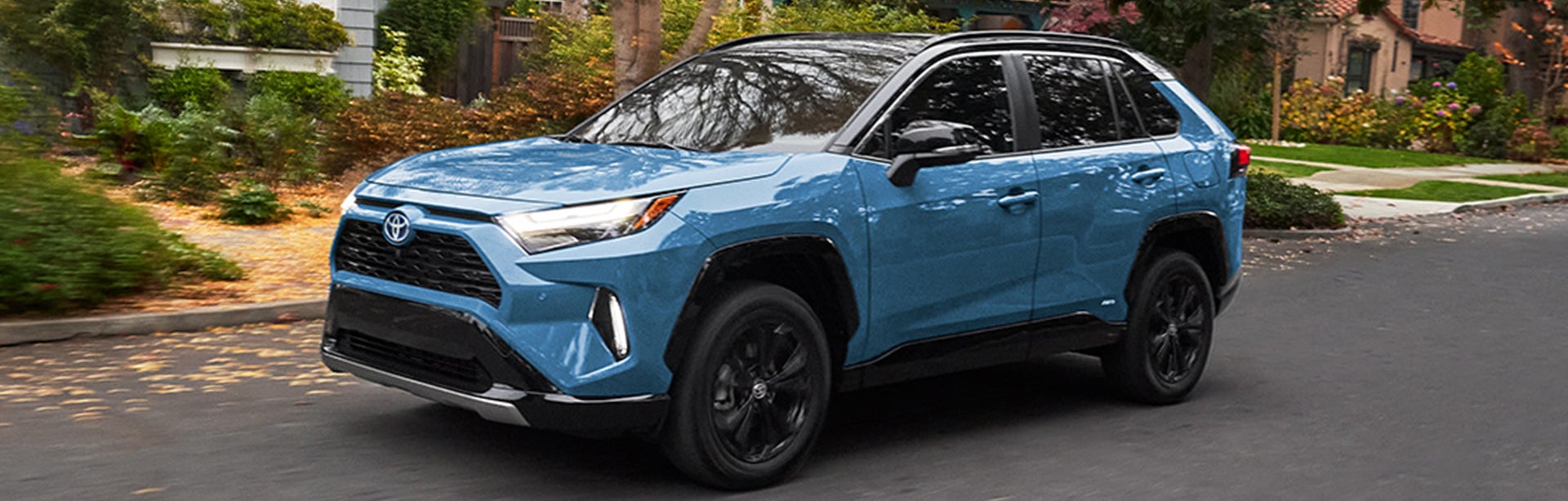
2023-rav4-blog-header

What You Need to Know About the 2023 Toyota RAV4

If you're the go-anywhere, do-anything type, the 2023 Toyota RAV4 is the road companion you've been looking for. Roomy and comfortable, without sacrificing maneuverability, this entry from Toyota addresses every CUV driver's pain points. To learn more about the new RAV4, continue reading below. Breaking Down the 2023 Toyota RAV4 Performance The Toyota RAV4 is molded after the CUV prototype — it's big enough for everybody and everything, but still supremely drivable. Consider the Toyota RAV4 with its 2.5 L 4-Cylinder engine and the potential for an estimated 35 miles per gallon. Once you factor in agile handling, it's easy to see why the RAV4 is a CUV that you can both depend on and feel good about driving. This model has other available performance features, including: Reinforced unitized steel body SPORT, Eco, NORMAL, EV drive modes Internal combustion engine with 176 hp @ 5,300 rpm Technology What you can expect from technology in the 2023 RAV4 is a commitment to safety first and foremost. The RAV4 is safer thanks to available safety features from Toyota, designed to keep you and your passengers out of harm’s way. This goes to show that streamlined drive is possible when you put your trust in Toyota. Other tech features available for the RAV4 include: LED headlights Apple CarPlay™ compatibility Bluetooth® wireless technology Design Toyota prides itself on the quality of its design, the new RAV4 rises to those lofty standards. There's only one word for the 70 cu ft of the RAV4: capacious. No CUV is finished without available upgrades for added comfort. Take a look at some of the other design features and options for this CUV: LED Daytime Running Lights (DRL) 18-in. 6-spoke bronze-colored TRD flow-formed alloy wheels and temporary spare LED front-seat reading lights, dome light and cargo area light Schedule a Test Drive near Tysons, VA To see if the RAV4 lives up to the hype, come see it on our lot. Pick your favorite trim package from our large inventory of new Toyota cars for sale near Tysons, VA. See what our regular rotation of new Toyota specials has in store for you today. *MSRP: Starting price represents the manufacturer’s suggested retail price (MSRP) for the trim. The MSRP does not include destination and handling charges, taxes, title, license, options, and dealer charges. Actual prices are set by the dealer and may vary. Photo is for marketing and example purposes only. Photo may not reflect starting MSRP or trim level.\n**EPA-estimated MPG for City/Highway for 2023 Toyota RAV4 . Actual mileage will vary. Displayed MPG is based on applicable EPA mileage ratings. Use for comparison purposes only. Your actual mileage will vary, depending on how you drive and maintain your vehicle, driving conditions, battery pack age/condition (hybrid models only) and other factors.

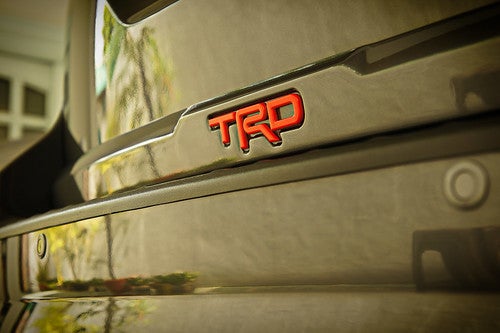
Toyota TRD Badge

What Does Toyota TRD Mean?

When you browse the superb range of Toyota vehicles at Koons Tysons Toyota in Vienna, Virginia, you'll see that several of the models have high-performance TRD or off-road specialized TRD Pro trim levels. But what does TRD mean and which current Toyota models offer TRD versions? TRD Motorsports Excellence TRD stands for Toyota Racing Development, a company that has seen many successes in various off-road and on-track motorsports platforms across the U.S. TRD uses the knowledge and experience gained from competition to make advancements in the performance and off-road capabilities of Toyota vehicles. The company was originally founded in 1974 in Japan as Toyota Sports Corner, with the trademark TOSCO, and was involved in the development and sales of motor sports parts and components. Toyota Racing Development was established in 1976 and TOSCO became TRD. In 1979, TRD USA was established as an overseas subsidiary, since which time it has become one of America's most successful and acclaimed names in motorsports. That's why, when you get behind the wheel of one of Toyota's TRD models, you'll experience scintillating performance and superb handling you'd expect from a track-bred car. Toyota Camry TRD The 2022 Toyota Camry TRD brings outstanding performance to one of America's most popular midsize sedans. The Camry TRD stands out with its distinctive black-accented LED lighting, gloss black trim and grille, and 19-inch matte black alloy wheels. Its aerodynamics are enhanced by the TRD front splitter, side aero skirts, rear diffuser, pedestal rear spoiler, and cat-back dual exhaust. Helping to harness the power of the Camry TRD's 301-horsepower 3.5-liter V-6 engine are strengthened underbody bracing, active cornering assist, and specially tuned suspension and brakes. Inside, you'll find unique black simulated leather upholstery, red contrast stitching, and the embossed TRD logo throughout the cabin. Toyota 4Runner For 2022, the Toyota 4Runner SUV gets four TRD variants — the new TRD Sport, the TRD Off-Road, TRD Off-Road Premium, and the TRD Pro. Each model is powered by a 270-horsepower 4.0-liter V-6 engine paired with a five-speed automatic transmission. The TRD Sport comes standard with rear-wheel- drive and the option of four-wheel drive. TRD upgrades include a hood scoop, front skid plates, unique 20-inch dark gray wheels, enhanced suspension, and body-color accents. If you want to take your big toys on your adventures, the 4Runner gives you a towing capacity of up to 5,000 pounds. The TRD Off-Road and Off-Road Premium add to the 4Runner's capability on the back trails with higher ground clearance, a transfer case skid plate, 17-inch wheels, a locking rear differential, multi-terrain ABS, active traction control, multi-terrain drive modes, and crawl control. When the going gets seriously tough, you need the 4Runner TRD Pro. It adds a unique grille, TRD Pro-stamped skid plate, 17-inch matte black wheels with all-terrain tires, TRD-tuned suspension, FOX high-performance shocks, and a TRD roof rack. A multi-terrain monitor offers front, rear, and side camera views to help you navigate obstacle-strewn trails with ease, while a panoramic view monitor makes the TRD Pro easy to maneuver in tight spaces. The cabin features TRD simulated leather upholstery and TRD Pro all-weather floor liners. Toyota Sequoia If you want to carry even more people or gear on your off-road adventures, the Toyota Sequoia is a full-size three-row SUV. The Sequoia TRD Sport and TRD Pro offer seating for up to seven people, a huge cargo area, and a maximum towing capacity of 7,400 pounds. The Sequoia is powered by a 5.7-liter V-8 engine that generates 381 horsepower and 401 pound-feet of torque via a six-speed automatic transmission. The Sequoia TRD Sport gets skid plates, 20-inch black alloy wheels, black and chrome exterior trim, and black running boards and roof rack. The suspension features sport-tuned Bilstein shock absorbers and stiffer front and rear anti-sway bars. The spacious cabin has easy-clean fabric seats, second-row captain's chairs, and automatic three-zone climate control. The TRD Pro can take you on the toughest trails with its multimode four-wheel-drive system, a locking limited-slip center differential, 18-inch Black BBS alloy wheels, FOX shock absorbers, and TRD skid plates. The TRD Pro's exterior features include a Toyota logo grille, Rigid Industries LED fog lights, black aluminum running boards, and a power liftgate for easy access to the cargo area. Toyota Tacoma For superb practicality and capability, the 2021 Toyota Tacoma midsize truck variants include the TRD Sport, TRD Off-Road, and TRD Pro trims. Powering each TRD model is a 278 horsepower 3.5-liter V-6 engine. The street-smart TRD Sport is offered in two cab and bed sizes with two- or four-wheel drive, and features sport suspension, 17-inch wheels, a hood scoop, color-keyed fender flares, and a 120-volt bed-mounted power outlet. The Tacoma TRD Off-Road comes standard with a spacious double cab and four-wheel drive. It offers 16-inch wheels, off-road-tuned suspension with Bilstein dampers, a locking rear differential, multi-terrain select, and crawl control. The Tacoma TRD Pro gets the specialist treatment with a unique grille and skid plate, all-terrain tires, a hood scoop, FOX shocks, an upgraded exhaust, the multi-terrain monitor system, and exclusive TRD upholstery. Toyota Tundra TRD Pro The 2021 Toyota Tundra TRD Pro is available with a double cab or the spacious CrewMax cab, and a short or standard bed. Under the hood is a 381-horsepower 5.7-liter V-8 that gives you a payload of up to 1,630 pounds and a maximum towing capacity of 9,900 pounds. Like the other TRD Pro models, the Tundra TRD Pro gives you all the capability you need to tackle the toughest trails. Lifted suspension, 18-inch BBS forged aluminum wheels, FOX shocks, and an automatic limited-slip differential ensure the ultimate off-road capability. With its unique exterior and interior styling elements, there's no mistaking the Tundra TRD Pro for any other truck. Whether you're looking for the exhilarating performance of a sports sedan, the space and versatility of an SUV, or the outstanding capability of a truck, Koons Tysons Toyota has a TRD model for you. Visit our conveniently located dealership today at 8610 Leesburg Pike, Vienna, Virginia, to see the awesome TRD range for yourself. Image via Flickr by oakztio2

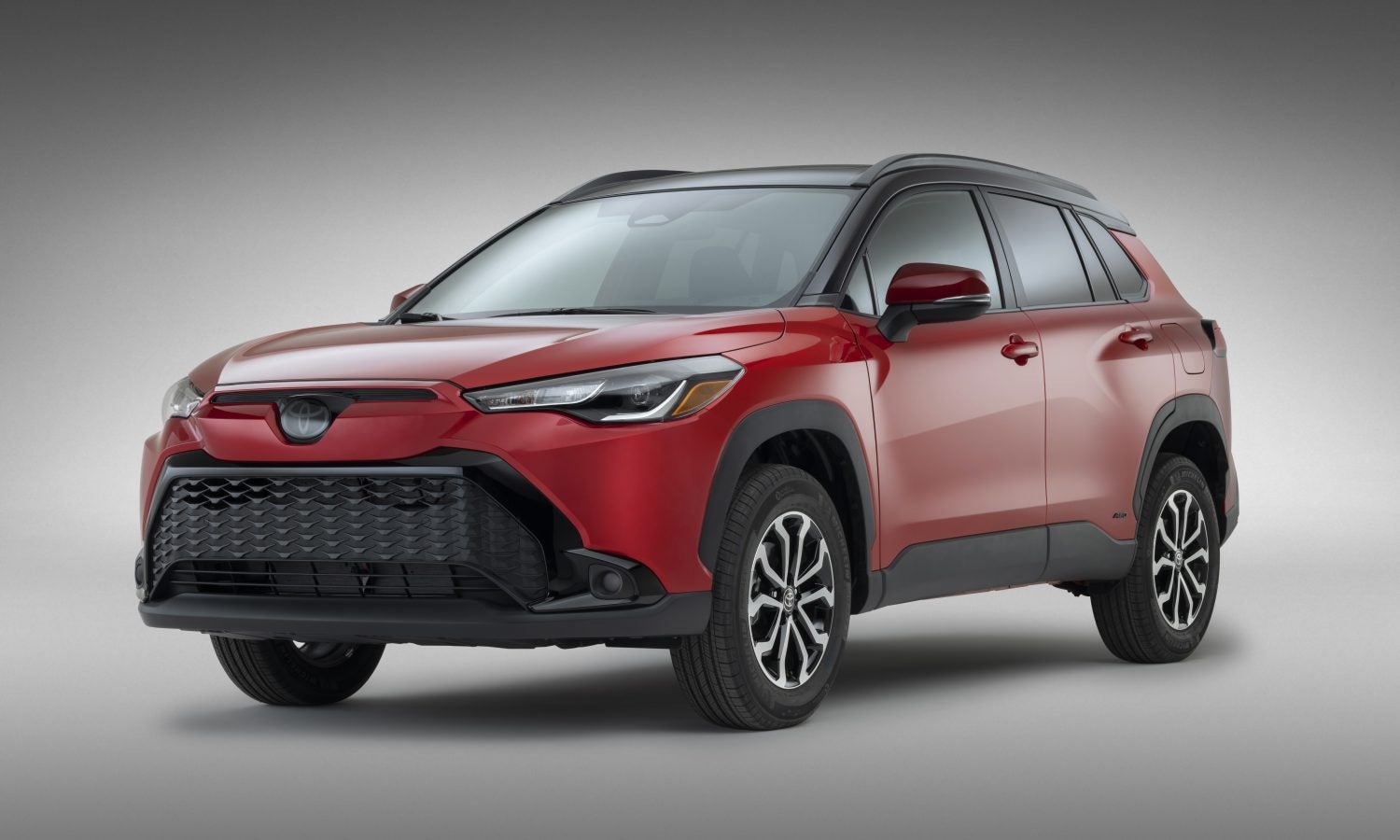
2023 Toyota Corolla Cross Hybrid

Should I Buy a Hybrid, Electric, or Gas Car?

As technology develops, gas-powered cars are starting to be overtaken by electric and hybrid options for the same vehicles. Many manufacturers started producing hybrids and electric vehicles (EVs) as a response to fluctuations in gas prices and rising demand from consumers. With so many options available, many people wonder what the pros and cons of each vehicle type are. Keep reading to learn about the differences between gas, electric, and hybrid vehicles. Gas-Powered Vehicles Gas-powered vehicles were the first to see widespread use in most parts of the world. At their inception, gas was relatively available and allowed for more power and longer driving distances than other options. Now, as the price of gas fluctuates in response to world events there are some pros and cons to choosing a gas-powered vehicle. Pros One of the reasons gas-powered engines continue to see widespread use is that they provide the power and performance people need to drive effectively. This is especially true in rural areas, where access to charging stations can be very low or completely nonexistent. Another reason these vehicles are still popular is that they have lower prices than either electric vehicles or hybrids since the technology is relatively old. Another pro of gas-powered vehicles is that maintenance costs are relatively low compared to EVs and locations that can provide these services are plentiful. An average gas-powered vehicle can also go around 300-400 miles on a single tank of gas, making them have excellent long-range driving capabilities. Finally, gas-powered vehicles have better torque and can haul trailers and other large cargo more easily than EVs and hybrids. Cons Gas-powered vehicles also have some cons. They contribute to pollution with their emissions, something many countries and companies are starting to pay more attention to. With more attention, there's more focus on creating low emissions. Another con of gas-powered vehicles is that they use a non-renewable resource for fuel. At some point in the future, gas won't be widely available. As the scarcity of this resource decreases, the price of gas will increase making it more and more expensive to fuel gas-powered vehicles effectively. Once the resource is completely gone, these vehicles won't function. Electric Vehicles EVs are a growing source of transportation for people around the world. As they become more popular, the technology they use becomes better and more efficient, giving them longer ranges better batteries and more locations to recharge. Like gas-powered vehicles, EVs have pros and cons you should consider when researching your next vehicle. Pros There are several pros to buying an EV. First, they are convenient since you can plug them in at your home and charge them easily, without leaving. Second, these vehicles have zero emissions when you drive them so they're much better for the environment than their gas-powered counterparts. Third, they don't require oil and often need a lot less regular maintenance than a gas-powered vehicle since there aren't as many moving parts subject to wear and tear. Another reason you may want to get an EV is that you can sell a used EV for a much higher price point than a used gas-powered vehicle. Further, the vehicles are relatively quiet while on the road, reducing noise pollution in areas such as cities and on highways that pass suburban areas. EVs cost less over time than gas-powered vehicles, since electricity is cheaper per mile than gas. Cons Like gas-powered vehicles, there are several cons to purchasing an EV. First, EVs are more expensive initially than gas-powered vehicles since they're rarer and still developing. Second, EVs have a much shorter driving range than gas-powered vehicles, averaging between 60 and 120 miles on a full charge, though this is increasing with each new model year. Third, EVs can take a long time to charge, depending on the make and model. For example, they may take between 4 hours to upwards of 8 hours to charge completely. While traveling, EVs are harder to recharge, as charging stations are much rarer than gas stations, especially in rural areas. Additionally, when you do need to repair the vehicle or replace parts, there are fewer technicians who can work on EVs and they're more expensive to replace. Finally, EVs are often smaller than gas-powered vehicles, so they can fit fewer passengers. Hybrid Vehicles Hybrid vehicles are a combination of gas-powered vehicles and EVs. They often have many of the benefits of both types but also suffer some of the drawbacks of both types as well. Pros Since hybrids contain both gas-powered engines and electric motors and technologies, they often extend the maximum range of the vehicle, beating both EVs and conventional combustion vehicles for how far they can drive on a single charge and tank of fuel. Since they have longer ranges, you can save money on fuel with fewer trips to the gas station. Further, they have fewer emissions than gas-powered vehicles and more than EVs. Like EVs, hybrid vehicles can have a higher resale value because of their longevity and electric motors. Unlike EVs, you don't have to charge a hybrid, so you can save time when fueling your vehicle, though you don't have the convenience of charging your hybrid at home. Cons While hybrid vehicles have many pros, they also have some cons. First, they often cost more than gas-powered vehicles for the same reasons EVs cost more. Second, repairs can cost a lot because the technology the vehicles use is newer and needs the attention of a specialist. Hybrids also aren't the best at towing or accelerating because they don't have the full capability of either gas-powered vehicles or EVs. Finally, hybrids require regular maintenance like gas-powered vehicles. Now that you've learned about the pros and cons of gas, electric, and hybrid vehicles, you can purchase your next vehicle with the full knowledge of each. At Koons Toyota Tysons, you can find an inventory of new vehicles to look through. You can also find ways to finance your next vehicle purchase or get service for your current Toyota vehicle. Contact us to learn more. Image via Toyota